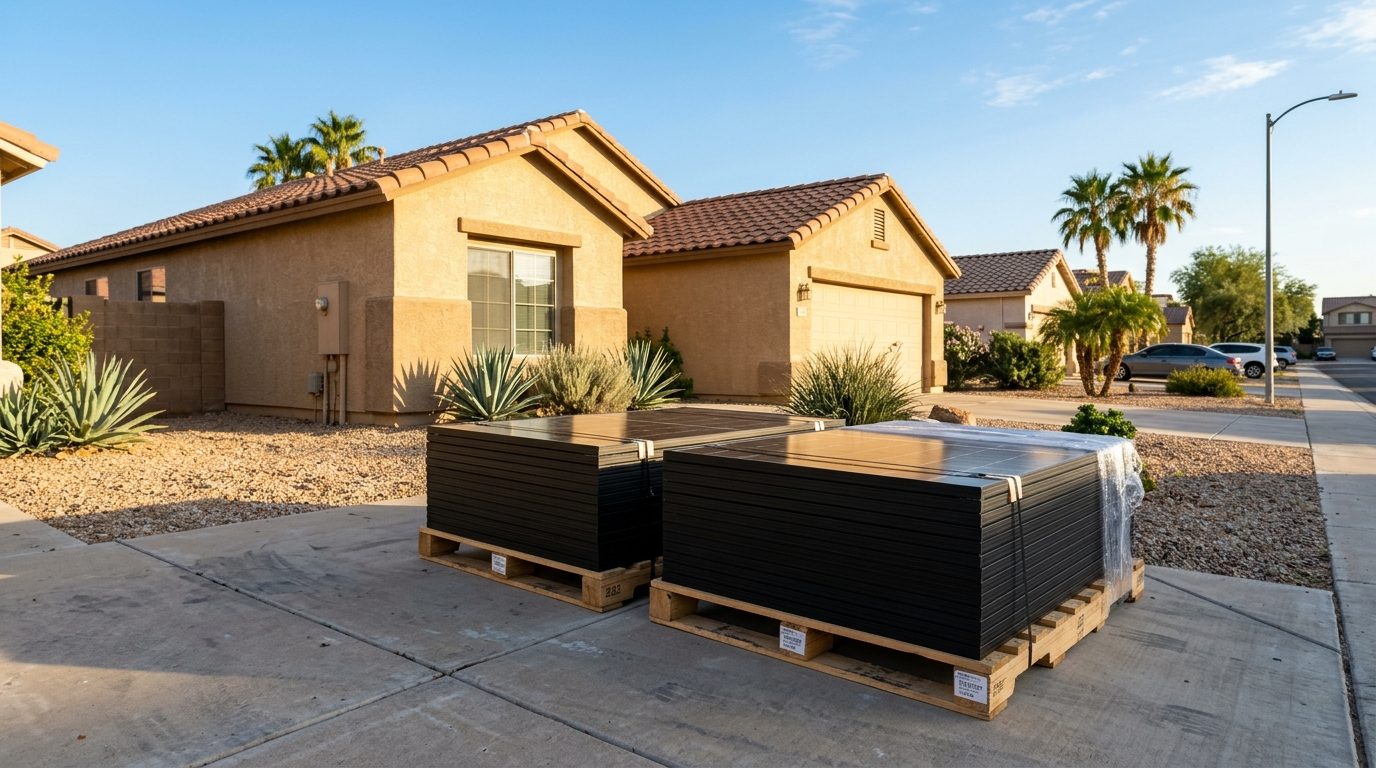
You have two quotes, one with HD Hyundai panels and one with Qcells, and only one of them gets signed.
Hyundai solar panels in stock
 8% OFFHyundai 440W Solar Panel 108 Cell N-Type TOPCon Bifacial All-Black HiN-T440NF(BK)5.00 (1)
 5% OFFHyundai 405W Solar Panel 132 Cell PERC Bifacial HiS-S405YH(BK) Clearance4.75 (4)
 19% OFFHyundai 440W Solar Panel 108 Cell N-Type TOPCon Bifacial All-Black HiS-T440NF(BK) Clearance5.00 (1)
 9% OFFSolarever 450W Solar Panel 96 Cells N-Type Bifacial All-Black SE-182*105-450M-96-BD Clearance5.00 (2)
 30% OFFZNShine Solar 410W Solar Panel 108 Cell ZXM7-SH108-410 Clearance5.00 (4)
 16% OFFTrina 415W Solar Panel 144 Cell TOPCon Bifacial All-Black TSM-415NE09RC.05 Clearance4.67 (6)
 JA Solar 440W Solar Panel 108 Cell N-Type Bifacial JAM54D41-440/MB Clearance4.33 (3)$230.82Buy nowIn stock
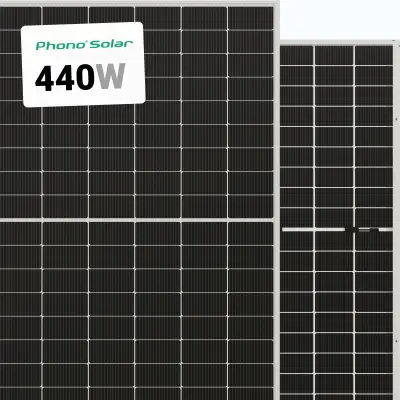 Phono Solar 440W Solar Panel 108 Cell PERC Bifacial PS440M8GFH-18/VNHB Clearance5.00 (2)$182.34Buy nowIn stock
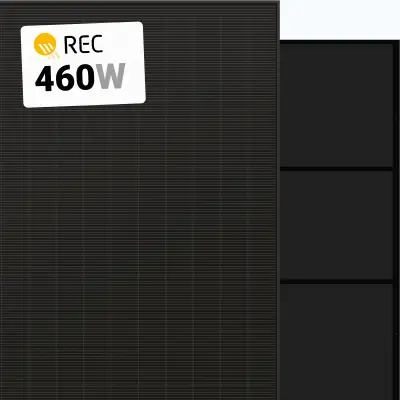 REC 460W Solar Panel 88 Cell HJT All-Black REC460AA PURE-RX4.75 (4)$387.46Buy now
Our take: on paper, Hyundai vs Q Cells is close to a tie. The HD Hyundai HiS-T430NF(BK) is a 430 W panel at 22.02% efficiency. The Qcells Q.TRON BLK M-G2+ 425 is 425 W at 21.8%, with the same 1722 × 1134 mm footprint. Hyundai has the longer performance warranty (30 years against 25) and a slightly better temperature coefficient. Qcells builds this panel in the USA and has a much bigger US presence. So decide on how you’re paying and which installer you trust more.
We’re an independent buyer’s desk, not HD Hyundai, Qcells or an installer. Some older reviews, such as EnergySage’s 2022 Hyundai review, quote Hyundai’s old 12-year warranty and 18–20% efficiency, which describe discontinued lines.
Need solar panels installed?
Fill out form and compare offers from solar professionals
Updated: November 2026
Choose Hyundai if
- You want output coverage past year 25 (Hyundai's runs to year 30)
- Your roof gets hot and you want the slightly lower heat loss
- You pay cash or by loan, so there's no homeowner tax credit left for panel origin to affect
Choose Qcells if
- Your quote is a lease or PPA, where domestic content can matter to the installer
- You want a panel made in the US
- You want the manufacturer behind the warranty to have 8.6 GW of factories in Georgia
| HD Hyundai NF(BK) | Qcells Q.TRON BLK M-G2+ | |
|---|---|---|
| Model | HiS-T430NF(BK) | Q.TRON BLK M-G2+ 425 |
| Rated power (W) | 430 Edge | 425 (tolerance 0/+5) |
| Efficiency (%) | 22.02 Edge | 21.8 |
| Dimensions (mm) | 1722 × 1134 × 30 | 1722 × 1134 × 30 |
| Pmax temperature coefficient (unit not printed on listings; read as %/°C) | −0.29 Edge | −0.30 |
| Product warranty (years) | 25 | 25 |
| Performance warranty (years; year-1 loss; yearly loss; end %) | 30; 1%; 0.4 points; 87.4% Edge | 25; 1.5%; 0.33 points; 90.58% |
| Country of manufacture | South Korea (per HD Hyundai) | USA |
| US base | Office in Irvine, CA | Two Georgia factories, 8.6 GW a year Edge |
What the table means for you: apart from warranty length and country of origin, the two panels are within about 1% of each other.
One doubt: the Hyundai listing just says “monocrystalline”. HD Hyundai’s 2024 US launch of TOPCon modules (residential, commercial and utility) quoted 22.3–22.9% efficiency, above this panel’s 22.02%, so the listing doesn’t tell us which line this panel belongs to.
Hyundai’s 30-year warranty adds years, not watts
Both product warranties cover materials for 25 years. Older Hyundai panels carried 12 years, and our page on older models explains which ones those were.
Here’s the guaranteed floor per panel:
- Hyundai: 99% after year 1, then 0.4 points a year. At year 25: 99 − 0.4 × 24 = 89.4%, so 430 W × 0.894 ≈ 384 W. At year 30: 87.4%, so 430 × 0.874 ≈ 376 W.
- Qcells: 98.5% after year 1, then 0.33 points a year. At year 25: 98.5 − 0.33 × 24 = 90.58%, so 425 × 0.9058 ≈ 385 W. After that, there’s no guarantee.
At year 25 the two floors are one watt apart, with Qcells ahead. Hyundai’s real advantage is the next five years. If you expect to still own the house past year 25, and still have the paperwork, Hyundai covers you longer.
The heat-loss gap is small
Our example assumes a cell 40 °C above the 25 °C test condition. Hyundai loses 40 × 0.29 = 11.6%, which leaves about 380 W of 430. Qcells loses 40 × 0.30 = 12.0%, which leaves about 374 W of 425. We’ve read the listings’ unitless coefficients as %/°C.
Qcells makes this panel in the USA; Hyundai makes its panels in Korea
Qcells has two plants in Georgia. Dalton was expanded to 5.1 GW of module capacity in late 2023. Cartersville started making cells in June 2026 and is planned to reach 3.3 GW of ingot, wafer and cell capacity plus 3.5 GW of modules by Q3 2026, per Hanwha’s announcement. Together that’s 8.6 GW a year. Qcells also makes panels in Malaysia and China, per EnergySage’s 2024 review, so ask where the panels on your quote were made.
HD Hyundai Energy Solutions makes cells and modules in Korea and exports them to the US under a TOPCon license, per its RE+ 2025 release. It hasn’t named a US factory. Its America office is in Irvine, California.
No homeowner credit is left for a cash buyer in 2026
The 30% Residential Clean Energy Credit is “not available for any property placed in service after December 31, 2025,” per the IRS. For a cash or loan system installed in 2026, there’s no homeowner credit left for panel origin to affect.
Leases and PPAs are different, because a third party owns the system and may qualify for a domestic content bonus. Ask the installer whether domestic content affects the price they quoted you.
Compare price per watt on your own two quotes
We don’t have a current price for either panel, and EnergySage’s Qcells and Hyundai figures come from different periods and product lines, so they can’t be compared.
Your own quotes can. Divide each total by the system size in watts. Say both quotes have 20 panels and the same total price. The Hyundai system is 8,600 W and the Qcells one is 8,500 W, so Hyundai costs about 1.2% less per watt. To match it, the Qcells quote would need to come in about 1.2% lower.
Are Hyundai panels still sold in the US?
Yes. HD Hyundai Energy Solutions signed a 36 MW module supply deal with US developer Turning Point Energy, and HD Hyundai Energy Solutions has a US office in Irvine, California. If your quote names a bifacial Hyundai module, see our bifacial page.
Can Hyundai and Qcells panels go on the same roof layout?
Yes. Both measure 1722 × 1134 × 30 mm, so the footprint is the same. We don’t have full electrical ratings for both, so ask your installer whether the two can share a string.