Good fit if
- You are repairing or extending a YH array and need the same frame and voltages
- The quote prices it clearly below a current Hyundai panel
- You want an all-black module for a 1500 V system
Look elsewhere if
- You are building a new array and want the most watts from a fixed roof
- You live somewhere hot: −0.347 %/°C against −0.29 for the NF(BK)
- The seller can't produce a warranty certificate for the serial numbers
Hyundai HiS-S400YH(BK)
YH series, 400 W
- Bifacial
- 132 half-cut cells
- All black
- 1500 V
- Rated power (STC)
- 400 W, tolerance −0/+3%
- Efficiency
- 20.0%
- Vmp / Imp
- 37.7 V / 10.61 A
- Voc / Isc
- 45.3 V / 11.25 A
- Temp. coefficients
- Pmax −0.347, Voc −0.268, Isc +0.032 %/°C
- NOCT
- 45.5 °C
- Size
- 1924 × 1038 × 32 mm (one listing: 35 mm)
- Weight
- 21.1 kg / 46.5 lb
- Max system voltage / fuse
- 1500 V DC / 20 A
- Connectors
- MC4, 1200 mm leads, 3 bypass diodes
- Listing
- UL 61730, Type 1 for Class A fire rating
Updated: November 2026
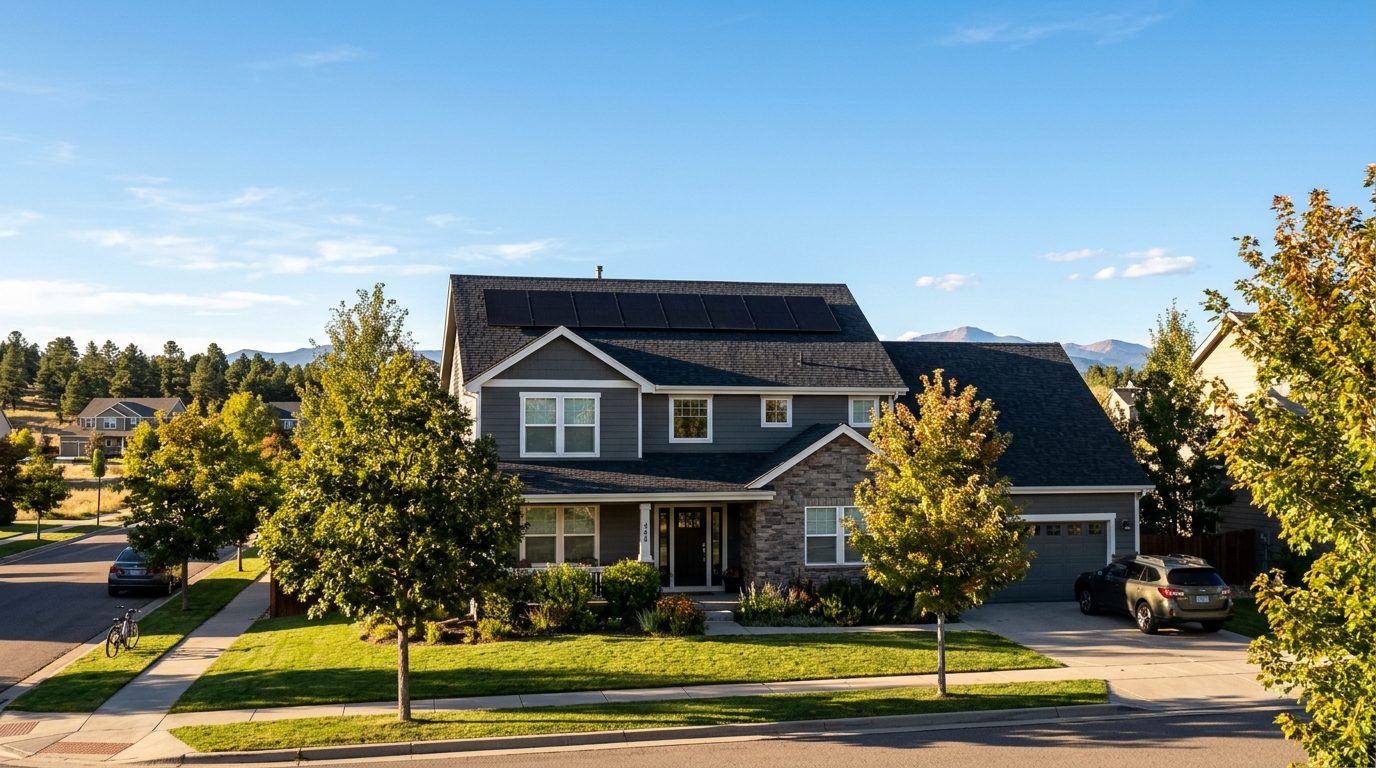
You have a quote or a used-panel listing that says “Hyundai 400W solar panel” and want to know what it is. The Hyundai 400W solar panel we can document is the HiS-S400YH(BK): a 400 W, 132 half-cut-cell, bifacial, all-black module at 20.0% efficiency, rated for 1500 V systems.
Hyundai solar panels in stock
 8% OFFHyundai 440W Solar Panel 108 Cell N-Type TOPCon Bifacial All-Black HiN-T440NF(BK)5.00 (1)
 5% OFFHyundai 405W Solar Panel 132 Cell PERC Bifacial HiS-S405YH(BK) Clearance4.75 (4)
 19% OFFHyundai 440W Solar Panel 108 Cell N-Type TOPCon Bifacial All-Black HiS-T440NF(BK) Clearance5.00 (1)
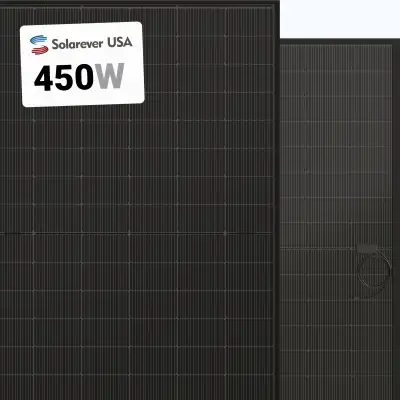 9% OFFSolarever 450W Solar Panel 96 Cells N-Type Bifacial All-Black SE-182*105-450M-96-BD Clearance5.00 (2)
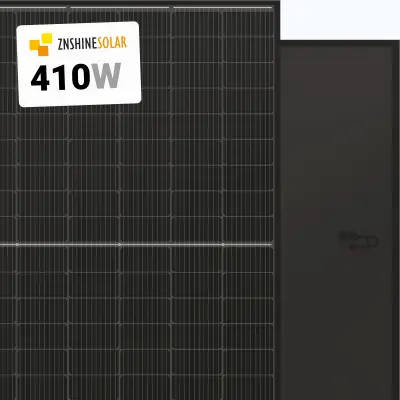 30% OFFZNShine Solar 410W Solar Panel 108 Cell ZXM7-SH108-410 Clearance5.00 (4)
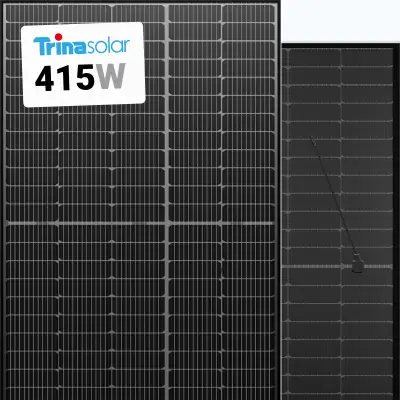 16% OFFTrina 415W Solar Panel 144 Cell TOPCon Bifacial All-Black TSM-415NE09RC.05 Clearance4.67 (6)
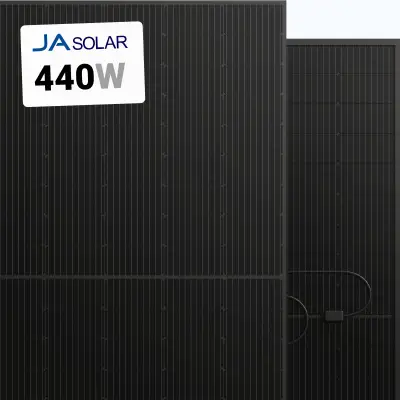 JA Solar 440W Solar Panel 108 Cell N-Type Bifacial JAM54D41-440/MB Clearance4.33 (3)$230.82Buy nowIn stock
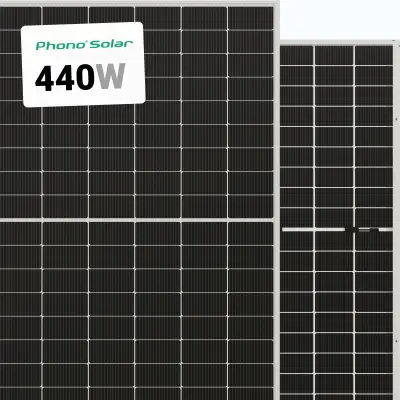 Phono Solar 440W Solar Panel 108 Cell PERC Bifacial PS440M8GFH-18/VNHB Clearance5.00 (2)$182.34Buy nowIn stock
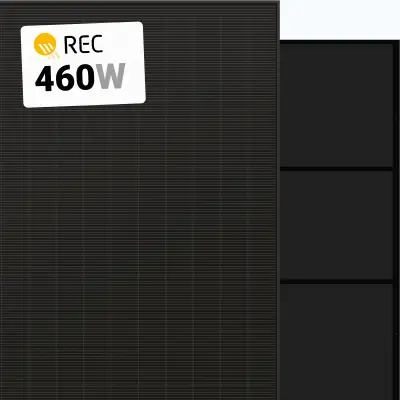 REC 460W Solar Panel 88 Cell HJT All-Black REC460AA PURE-RX4.75 (4)$387.46Buy now
Our take: it’s a sound panel that makes sense at a clearance price or to patch an existing YH array. For a new roof, the NF(BK) 430 W puts about 10% more watts on the same area. We’re an independent buyer’s desk, not HD Hyundai and not a seller.
The Hyundai 400 W panel we can document is the HiS-S400YH(BK)
| Model code | What our sources list |
|---|---|
| HiS-S400YH(BK) | 132 bifacial half-cut mono cells, black frame and backsheet, 1500 V |
If your quote lists a different 400 W Hyundai code, ask for its datasheet before comparing it with anything here.
Need solar panels installed?
Fill out form and compare offers from solar professionals
The width is 1038 mm, whatever the listing says
EnergySage gives the S400YH as 1924 × 1083 × 35 mm, while SolarHub’s listing and others give 1924 × 1038 × 32 mm. The arithmetic settles the width: 400 W ÷ (1.924 × 1.038 = 1.997 m²) is 20.0%, the published efficiency, while 1083 mm would give about 19.2%. The arithmetic can’t settle the depth, so check the frame label before ordering clamps.
It suits black-roof homes and 1500 V strings
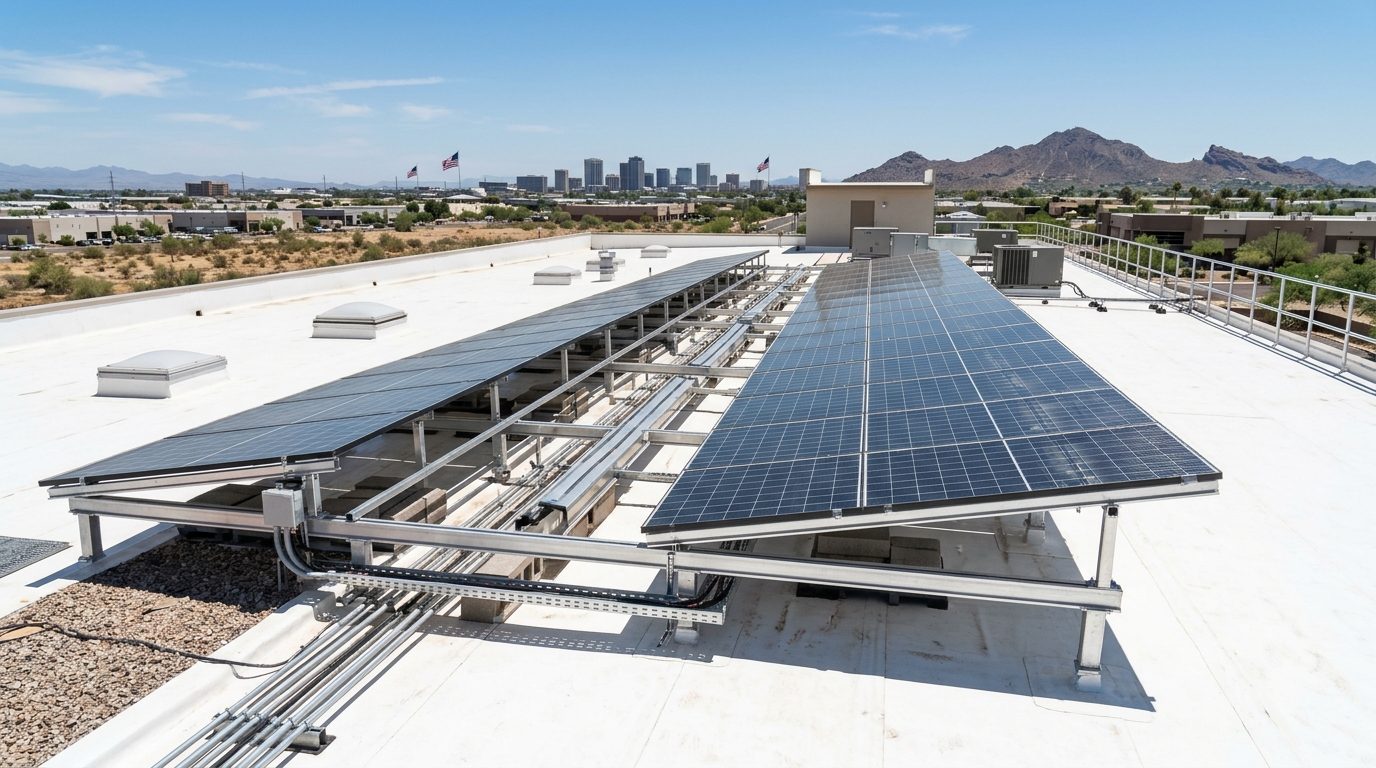
The bifacial back is unlikely to add much on a pitched roof, where a flush-mounted panel’s rear gets little light. On a flat-roof tilt rack it’s different: one installer told Solar Power World “At 15°, I’ve seen a good 4 or 5% increase over our non-bifacial products,” with installers advising bifacial modules at least 15 in. above the roofline, where monofacial panels may be clamped 4 in. above it. Our bifacial picks cover which mounts pay off.
Twelve panels per string on a 600 V inverter
Voc climbs on cold mornings, so the coldest day sets string length. Assumptions: record low −10 °C (14 °F), STC 25 °C, Voc 45.3 V, Voc coefficient −0.268 %/°C.
- Cold Voc = 45.3 × (1 + 0.00268 × 35) ≈ 49.55 V
- 600 V inverter: 600 ÷ 49.55 = 12.1, so 12 in series (594.6 V); 13 would reach 644 V
- 1500 V system: 30 in series (1486.5 V)
Redo it with your own record low and the inverter’s MPPT window, and check that Isc of 11.25 A fits its input current limit. The NF(BK) 440 W page runs the same sum for the newer panel.
Two warranty listings disagree
Both give 25 years on materials. For power, EnergySage lists −2% in year 1, then −0.54% a year, ending at 85% after 25 years. SolarHub lists 90% at 15 years and 80% at 30. Ask for the certificate that matches your serial numbers.
The NF(BK) 430 W is listed with a 30-year output warranty: −1% in year 1, then −0.4% a year, which works out to 89.4% at year 25 and 87.4% at year 30. EnergySage’s page shows 30% at the end, a display error nobody would sign up for.
| HiS-S400YH(BK) | HiS-S405YH(BK) | NF(BK) 430 W | |
|---|---|---|---|
| Power (W) | 400 | 405 | 430 Edge |
| Efficiency (%) | 20.0 | 20.3 | 22.02 Edge |
| Size (mm) | 1924 × 1038 | not listed | 1722 × 1134 |
| Power density (W/m²) | ~200 | not listed | ~220 Edge |
| Pmax temp. coeff. (%/°C) | −0.347 | −0.34 | −0.29 Edge |
| Output warranty | 25 y, 85% at end | 25 y, 85% at end | 30 y, 87.4% at year 30 Edge |
The NF(BK) 430 W is the better new buy
The NF(BK) wins every row with a winner, so the 400 W earns its place only on price or fit. Take the 400 W at a clear clearance discount, or to repair a YH array where frame and Voc must match. The 405 W gives 5 W more, but we found no dimensions for it, so confirm the frame. For a new system that should get the most kWh from a fixed roof and lose less in heat, read our 435 W review.
The YH line is hard to find new
We couldn’t find the YH on a current Hyundai datasheet. EnergySage shows the 400 W and 405 W as “Coming Soon”. Mixing generations needs care: an NF(BK) is 202 mm shorter and 96 mm wider, so rail spacing changes, and its electrical values differ. Put replacements on their own string or MPPT input. Other retired lines are on our older models page.
How many HiS-S400YH(BK) panels fit in one string?
At a −10 °C record low, 12 in series on a 600 V inverter (594.6 V) or 30 on a 1500 V system (1486.5 V).
Which warranty applies to the HiS-S400YH(BK)?
EnergySage lists 25 years with 85% output at the end; SolarHub lists 90% at 15 years and 80% at 30. Check the warranty certificate for your serial numbers.
Is the HiS-S400YH(BK) 1038 mm or 1083 mm wide?
1038 mm: 400 W ÷ 1.997 m² gives the published 20.0%, while 1083 mm would give about 19.2%.
Neighbouring models
- NF(BK) 435 W review
The current Hyundai panel we’d compare first for a new roof.
- NF(BK) 440 W
Specs and string sizing for the 440 W version.
- Older Hyundai models
Discontinued lines and what to compare each with.