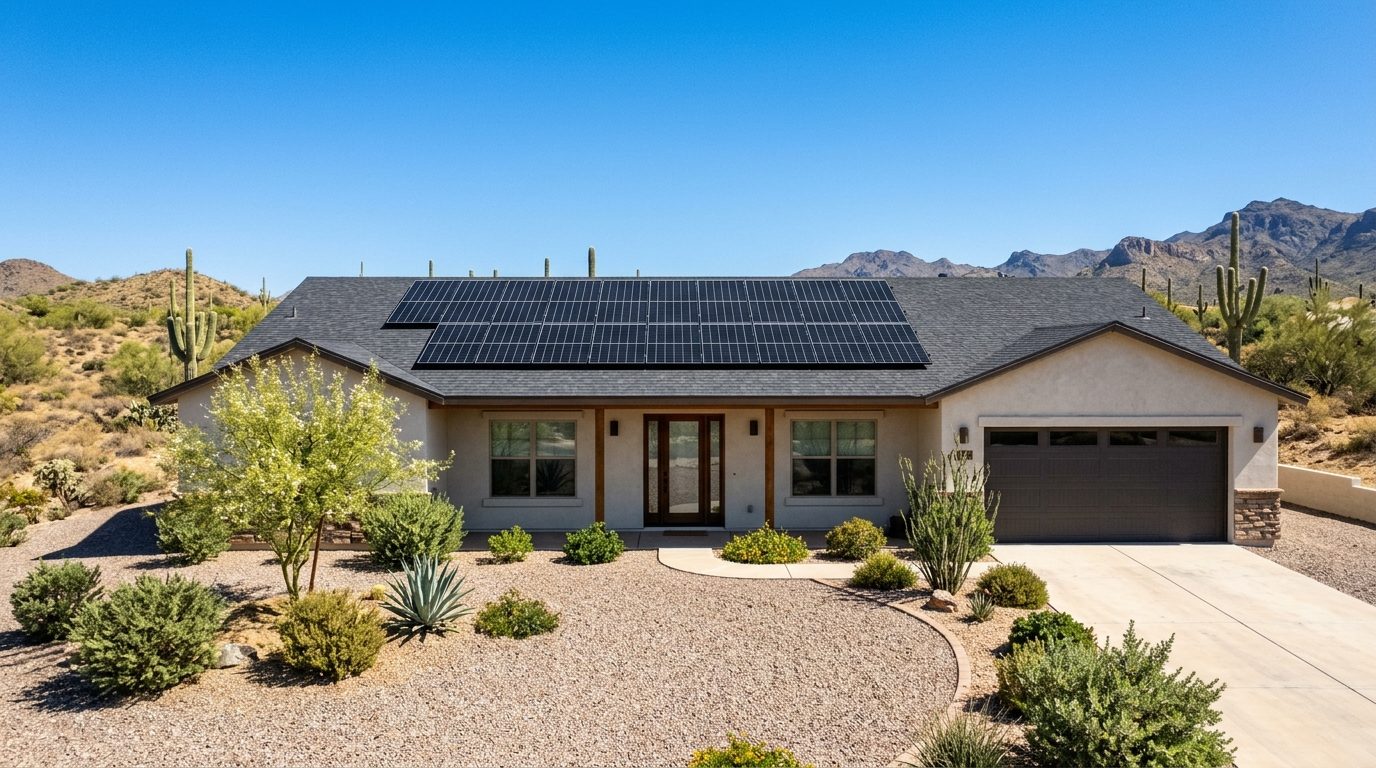
If you’re reading this, you probably have a quote or a listing open with a Hyundai bifacial panel on it. HD Hyundai Energy Solutions’ current bifacial panels are N-type TOPCon modules with glass on both sides, and two lines cover most US jobs.
Hyundai solar panels in stock
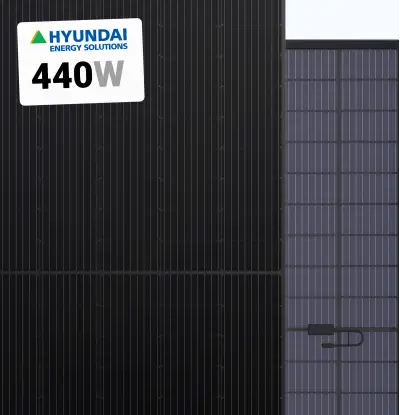 8% OFFHyundai 440W Solar Panel 108 Cell N-Type TOPCon Bifacial All-Black HiN-T440NF(BK)5.00 (1)
 5% OFFHyundai 405W Solar Panel 132 Cell PERC Bifacial HiS-S405YH(BK) Clearance4.75 (4)
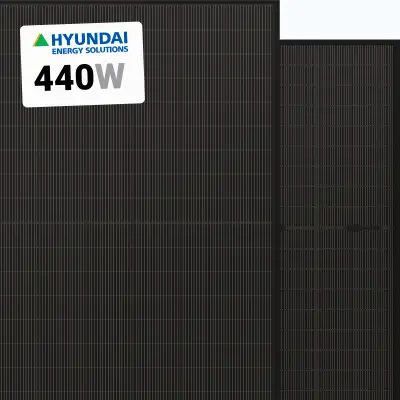 19% OFFHyundai 440W Solar Panel 108 Cell N-Type TOPCon Bifacial All-Black HiS-T440NF(BK) Clearance5.00 (1)
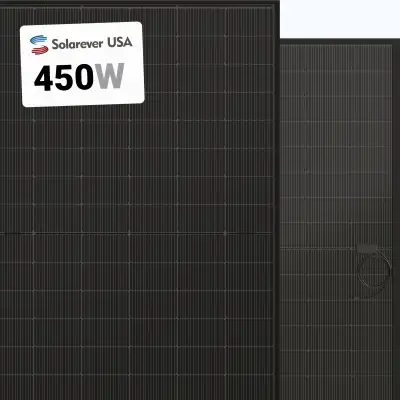 9% OFFSolarever 450W Solar Panel 96 Cells N-Type Bifacial All-Black SE-182*105-450M-96-BD Clearance5.00 (2)
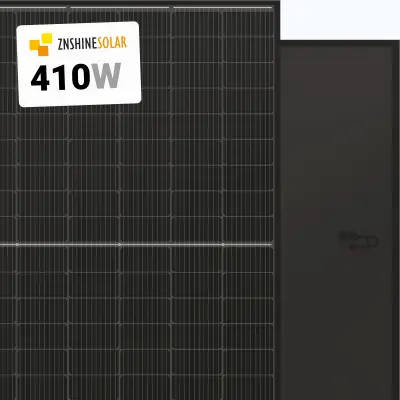 30% OFFZNShine Solar 410W Solar Panel 108 Cell ZXM7-SH108-410 Clearance5.00 (4)
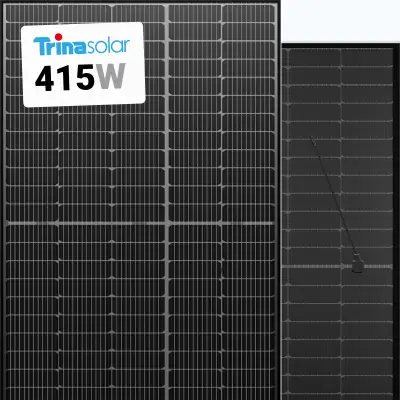 16% OFFTrina 415W Solar Panel 144 Cell TOPCon Bifacial All-Black TSM-415NE09RC.05 Clearance4.67 (6)
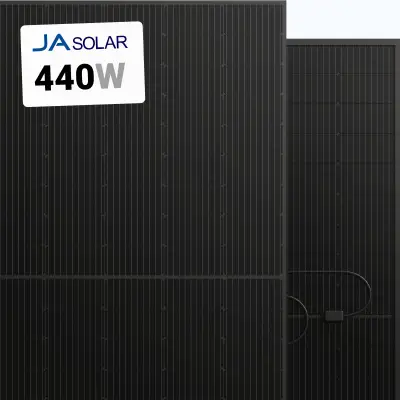 JA Solar 440W Solar Panel 108 Cell N-Type Bifacial JAM54D41-440/MB Clearance4.33 (3)$230.82Buy nowIn stock
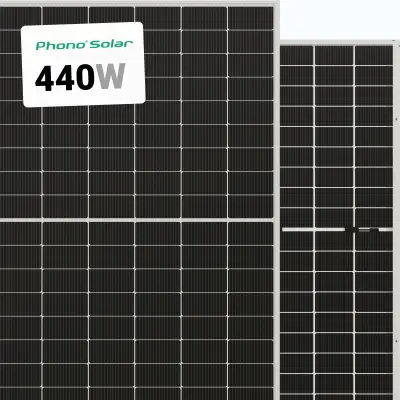 Phono Solar 440W Solar Panel 108 Cell PERC Bifacial PS440M8GFH-18/VNHB Clearance5.00 (2)$182.34Buy nowIn stock
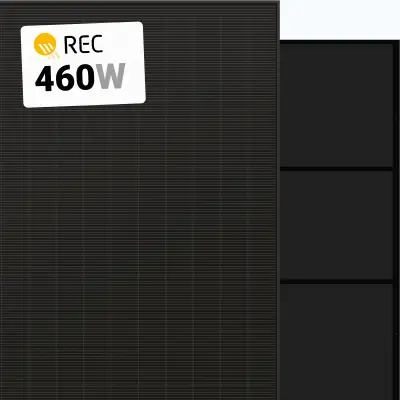 REC 460W Solar Panel 88 Cell HJT All-Black REC460AA PURE-RX4.75 (4)$387.46Buy now
Our take: for a home roof, the 108-cell HiN-T440NF(BK) is the pick: 440 W, 22.53 % efficiency, black. For ground mounts, carports and commercial arrays, the 156-cell HiN-T630NJ at 630 W is the better choice. Don’t expect too much from the back of either panel. A year of NREL and Sandia field data on single-axis trackers showed a 6–9 % bifacial energy gain, and most roofs will see less than that.
We’re an independent buyer’s desk. We aren’t HD Hyundai, a distributor or an installer. The specs come from published datasheet figures, and we don’t quote store prices. Who we are and how we compile specs.
Need solar panels installed?
Fill out form and compare offers from solar professionals
Updated: November 2026
Hyundai bifacial panels at a glance
| Model | Cells | Power (W) | Efficiency (%) | Bifaciality (%) | Size (mm) | Weight (kg) | Pmax temp. coefficient (%/°C) | Warranty |
|---|---|---|---|---|---|---|---|---|
| HiN-T440NF(BK) | 108 half-cut, 16BB | 440 | 22.53 | 80 | 1722 × 1134 × 30 | 24.5 | −0.30 | 25-yr product; 30-yr performance, 87.4 % at year 30 |
| HiN-T630NJ | 156 half-cut, 16BB | 630 | 22.5 | 80 | 2465 × 1134 × 35 | 34.5 | −0.30 | 12-yr material; 90 % at year 22, 80 % at year 30 |
What this means for you: both lines use the same cell technology and have the same efficiency, bifaciality and heat loss. They differ in size, weight and warranty, so the choice comes down to where the panel goes and who has to carry it there.
The NF(BK) figures come from its spec sheet as reproduced on ComparePV (September 2026). The NJ figures come from a module catalog listing we checked on November 28, 2026. The model codes are easy to read once you know the pattern. HiN means an N-type cell and T means TOPCon. The NF(BK) is the 108-cell format and the NJ is the 156-cell format. We haven’t confirmed how HD Hyundai assigns each to residential or commercial use. We couldn’t verify a datasheet for it, so we’ve left it out of this page.
Best for a small or average home roof: HiN-T440NF(BK)
The HiN-T440NF(BK) produces about the same power per square meter of roof as the NJ. Each panel measures 1722 × 1134 mm (1.95 m²) and weighs 24.5 kg, and it produces 225.3 W per square meter. Its glass is rated for 5,400 Pa of load front and rear. At 24.5 kg, it is lighter than the NJ, but ask your installer about handling.
Here’s what that looks like for an 8 kW home system. You’d divide 8,000 W by 440 W, which gives 18.2, so you round up to 19 panels for 8.36 kW. Those 19 panels cover about 37.1 m² of roof and weigh 465.5 kg before racking.
Who it suits: homeowners with a limited roof, or one broken up by vents and dormers, where a smaller panel fits around the obstacles.
Best all-black look: the same NF(BK) line
We found no separate all-black bifacial model in the sources we checked. The BK suffix on the NF line marks the black version. The spec listing we used doesn’t describe the frame or cell color, though, so check the datasheet photo before you assume the whole panel is black.
On a flush roof mount, the back of a bifacial panel faces dark shingles a few inches away, so very little light reaches it. That means you’re mostly paying for the glass-glass build (2.0 mm semi-tempered glass on both sides) and for the look, not for extra output. We think that’s still a fair reason to buy the panel. It just shouldn’t show up as bifacial gain in your production estimate.
Hot climates: heat affects both lines equally
All panels lose output as they heat up. The NF(BK) loses 0.30 % of its power for every 1 °C above 25 °C, and it has a NOCT of 44 °C. NOCT is the cell temperature in a standard mild-day test, so a lower number is better.
On a summer roof, we assume the cells reach 65 °C. That’s 40 °C above the 25 °C test temperature. Multiply 40 by 0.30 % and you get a 12 % loss, so the 440 W panel delivers about 387 W in that hour. The NJ has the same coefficient, so heat doesn’t separate the two lines.
Best for ground mounts, carports and snowy sites: HiN-T630NJ
The HiN-T630NJ makes the most of its back side, because a ground mount or carport leaves open air and bright ground behind the panel. It’s rated at 630 W with 80 % bifaciality. It measures 2465 × 1134 × 35 mm and weighs 34.5 kg, so plan on two people per panel.
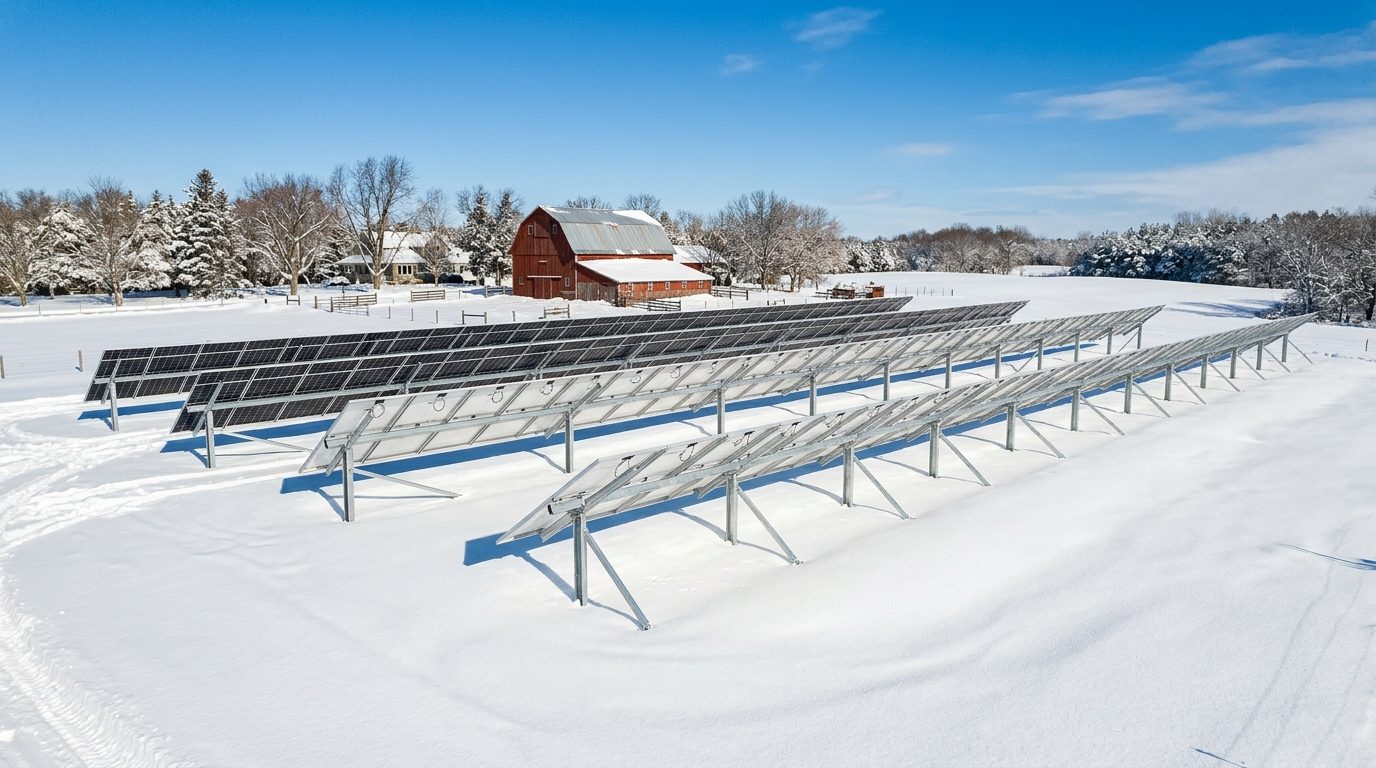
To estimate the extra output from the back, we assume the rear receives 10 % of the light hitting the front. That’s an illustration, not a site measurement. With 80 % bifaciality, 630 W × 0.8 × 0.10 comes to about 50 W, or roughly 8 % extra. That falls inside the 6–9 % NREL measured.
Fresh snow reflects far more light than grass or gravel, so winter can raise the rear-side gain on a snowy ground mount. Ground reflectance is uncertain enough that DOE and NREL are building a multi-year ground albedo database. A workshop in 2018 named better albedo data as a need for estimating bifacial output, according to NREL’s albedo paper.
Who it suits: rural ground mounts, pole mounts and carports, especially in northern states with lasting snow cover.
Best for commercial and utility arrays: the NJ line
On big jobs the NJ line needs fewer panels for the same power. The same 8 kW array works out to 8,000 / 630 = 12.7, so 13 panels for 8.19 kW, covering 36.3 m² and weighing 448.5 kg. The NF(BK) needs 19 panels for that system.
Both lines produce about 225 W per square meter, so the total area barely changes. The bigger panel won’t save you much roof or ground, but it will save you six trips up the ladder. Across a large array, fewer panels means fewer clamps, fewer connections and less labor.
HD Hyundai does supply projects at utility scale. In April 2026 the company signed a supply contract of about $85 million with Hillsboro Solar Project LLC, as pv magazine USA reported. The project will use only glass-to-glass bifacial modules built at the company’s factory in South Korea, with deliveries from Q2 2026 through Q1 2027. More updates like this are in our news section.
What bifacial gain to expect in the field
In NREL and Sandia’s 75 kW field test in Golden, Colorado, five bifacial technologies on single-axis trackers showed a “cumulative bifacial energy gain between 6-9%” over one year, per the study’s results. Their models predicted measured output to within about ±2 %. In January, shading from the tracker’s torque tube made rear irradiance up to 6 % uneven. The study doesn’t tie its result to any brand, Hyundai included.
The rear side gains the most when the panel sits high, the ground underneath is light-colored or snow-covered, and nothing shades the back. It gains the least on a flush roof mount over dark shingles. A ground mount over grass falls somewhere between the two.
Hyundai bifacial panel warranty, compared by line
According to its spec sheet, the NF(BK) has a 25-year product warranty and a 30-year performance warranty. It allows 1.00 % degradation in the first year and 0.40 % per year after that, which leaves 87.4 % at year 30. For the 440 W model, that’s about 385 W.
The NJ listing shows a 12-year material warranty, with 90 % of rated power guaranteed at 22 years and 80 % at 30 years. That’s about 504 W left from a 630 W panel.
Homeowners get the better deal with the NF(BK): twice the product coverage and a higher guarantee at year 30. We took these terms from spec listings and haven’t seen the warranty PDFs, so ask for the PDF and read it before you rely on any of this.
Federal tax credit status for Hyundai panels in 2026
The 30 % Residential Clean Energy Credit has ended for new home systems. The IRS says that “The credit is not available for any property placed in service after December 31, 2025,” per irs.gov (page updated November 23, 2026). That applies to any brand. We’ll post changes in News.
FAQ
Is HD Hyundai the same as Hyundai Energy Solutions?
The panels covered here are listed by HD Hyundai Energy Solutions, which has separate residential and commercial & utility module categories on its official site. Some catalogs still file them under Hyundai Heavy Industries. The company reached the top 10 in the Americas residential solar market in 2025, per pv magazine USA.
Where are Hyundai bifacial panels made?
The modules for the Hillsboro utility project are made at the company’s factory in South Korea. We found no source that states the factory for NF(BK) panels sold in the US, so ask the seller.
Are bifacial panels worth it on a flush-mounted roof?
Only for the durability of the glass-glass build and for the look. Close to the roof, the back of the panel gets little light, so the rear side adds very little output.
Does Hyundai make an all-black bifacial panel?
The NF(BK) is the black version of the 108-cell line. Check the datasheet image to see how much of the panel is actually black.
Before you sign
- Get the full model code from your quote, including the suffix (NF(BK) or NJ) and the wattage.
- Ask for the current datasheet and warranty PDF, and check them against the table above.
- Check the price on the day you buy. Prices change, and we don’t track them.
- On a flush roof, ask whether the production estimate counts rear-side gain, and what ground reflectance it assumes.
- Have the installer check the roof can carry about 465 kg of panels for 8 kW, plus racking.
- Don’t plan around the 30 % federal credit for a home system placed in service in 2026.